



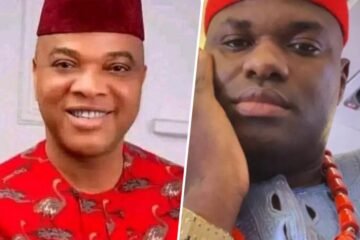

Fresh controversy has erupted around the ongoing NDC primaries in Abia State following a blistering protest by Chief Engr Joseph Umunna (Onwa Abia), an aspirant for the Abia North Senatorial ticket, who has openly expressed deep displeasure over what he described as an alarming and dangerous attempt to hijack the democratic process in favour of a particular aspirant.
In a strongly worded reaction, Umunna painted a troubling picture of what he alleged to be a calculated effort to compromise the integrity of the party’s internal democratic exercise, warning that any process tainted by manipulation, secrecy, favoritism and desperation could leave the party gravely weakened ahead of the 2027 general elections.
The senatorial aspirant insisted that the very foundation of democracy within the party was being threatened by actions he described as suspicious, unfair and fundamentally unacceptable, stressing that the purpose of any credible primary election is to produce the most popular, competent and broadly accepted candidate—not a candidate allegedly manufactured through influence, backstage arrangements and procedural distortions.
According to Umunna, there are troubling signs suggesting what he called a “practical hijack” of the primary process by a particular aspirant allegedly seeking to bend the system in his favour. He argued that if unchecked, such developments could ultimately undermine the credibility of the party and alienate genuine supporters and stakeholders.
He warned that imposing what many may perceive as an unpopular candidate through an allegedly manipulated process could trigger serious political consequences for the party in Abia North and beyond, insisting that history has repeatedly shown that injustice and lack of transparency often produce division, voter apathy and devastating electoral setbacks.
Expressing strong dissatisfaction over the conduct of the process, Umunna further alleged that delegates sent from Abuja were received privately by a certain aspirant at his residence instead of the official party secretariat—an action he described as highly inappropriate and suspicious.
He further alleged that after the private reception, prolonged meetings allegedly took place away from the supervision of relevant party structures, including additional engagements at Rixos Continental Resort Hotel, a development he said raises disturbing questions about transparency, neutrality and fairness.
According to him, the inability of the state party leadership to visibly coordinate and supervise such critical engagements has fueled suspicion and deepened concerns among stakeholders who expected a transparent and professionally managed process.
Umunna stated that while he would provide evidence of alleged irregularities at the appropriate time, the current atmosphere surrounding the primaries already points to what he described as avoidable procedural confusion capable of damaging the party’s reputation.
He also accused the Abia State party leadership of playing what he termed “hide and seek” with a process expected to inspire confidence among party faithful.
Faulting the logistics of the primary exercise, he questioned the rationale behind allegedly releasing information about the venue of a primary election around 3 a.m. for a contest expected to commence by 7 a.m., describing such an arrangement as a glaring administrative failure and a dangerous signal of foundational disorder.
In another major allegation, Umunna criticized the decision to allegedly hold primary activities in two separate locations, arguing that such a move could frustrate delegates, create confusion and potentially compromise the credibility of the outcome.
He maintained that forcing delegates to shuttle between multiple locations under severe time constraints creates fertile ground for disorder, disenfranchisement and manipulation.
The senatorial hopeful further lamented what he described as a shocking veil of secrecy surrounding the entire process, alleging that even moments before the primary contest, aspirants were still uncertain about who had officially qualified to participate.
He described the situation as deeply troubling and inconsistent with globally accepted democratic standards, warning that a transparent electoral process cannot thrive where contestants are allegedly left in the dark regarding critical information.
According to Umunna, the conduct of the process has generated serious questions about whether the state leadership lacks the competence to organize a transparent exercise or whether undue influence has allegedly been allowed to dictate the direction of events.
He warned that silence in the face of perceived injustice would amount to surrendering the future of the party to political manipulation, insisting that members committed to fairness and accountability would resist any attempt to subvert the collective will of party faithful.
Calling on the national leadership of the NDC to urgently intervene, Umunna warned that failure to act decisively may lead to avoidable litigation, deep internal resentment, political bitterness and long-term divisions capable of costing the party dearly.
“This was never the intention of the founding fathers of the party,” he reportedly maintained, stressing that internal democracy must not become a ceremonial slogan while alleged manipulation quietly determines outcomes.
He insisted that only a free, fair and transparent process can produce a candidate with the legitimacy, popularity and moral authority needed to successfully fly the party’s flag in 2027.
In a final emphatic note, Umunna declared that any attempt to allegedly resurrect what he called the “old Abia political culture” of imposition and elite manipulation would be firmly resisted, insisting that the will of the people—not the ambition of one individual—must prevail.
For many observers, the unfolding developments have now placed the Abia NDC primaries under intense scrutiny, with growing calls for transparency, accountability and immediate intervention to safeguard the credibility of the process before internal discontent escalates into a full-blown political crisis.